 26/03/2022
 26/03/2022


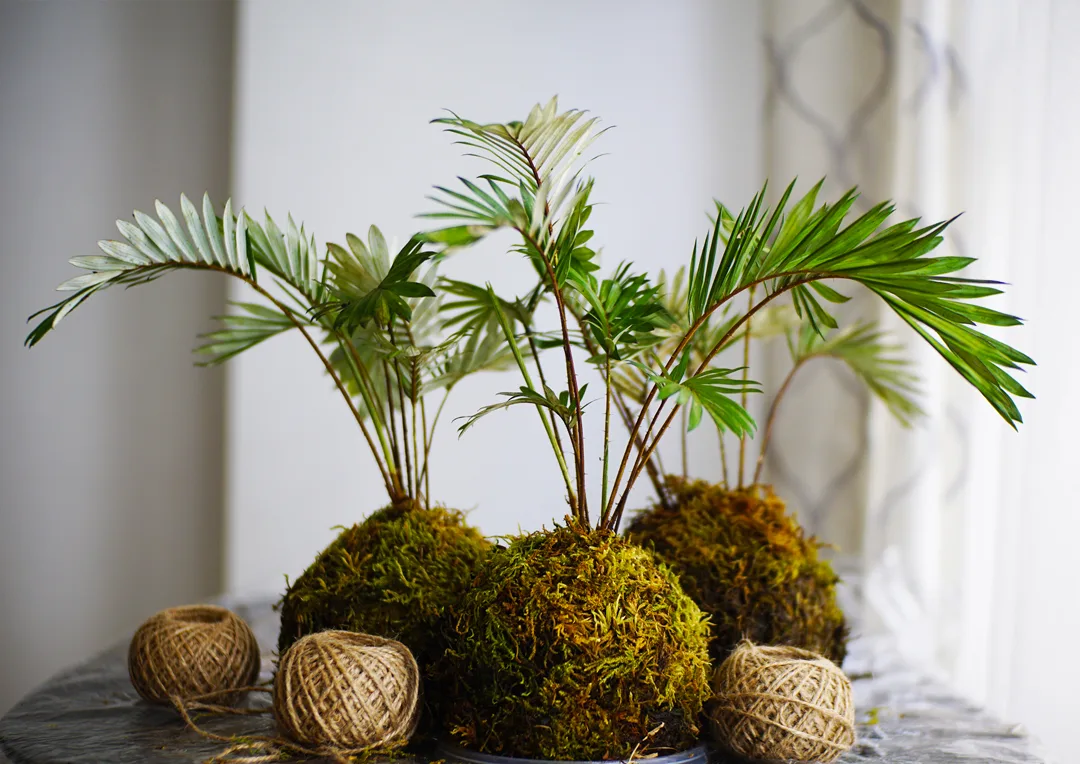

The stylistic choices made by Kazuyo Komoda reflect her Japanese heritage. But, given the bath’s cultural significance in Japan, from the traditional ritual purification bath, Ofuro, to the more modern Sento or thermal baths, it couldn’t be any other way. Thus, in the mood board, you can imagine complete spaces that express themselves, where you can spend time, keep valuable objects, and enjoy delicate decorations. Consider adding original Kokedama moss planting balls to create “green” areas.
Both mood boards share the presence of marble. However, the interpretation and choice of composition, in this case, speak of two completely different inspirations.
Kazuyo Komoda uses a specific type of warm-toned marble, Portuguese pink onyx, to create colours and textures. She alternates it with a proposal that is even more focused on surface detail; marmorino is recomposed powdered marble made without chemical additives but with natural mixing elements such as egg white or slaked lime. The spreading method and tools used in this case impact the texture. As a result, it is possible to achieve smoother effects or rougher surfaces that absorb light, gaining nearly a third dimension.
Finally, Kazuyo Komoda uses marble with frosted glass and mirrored walls and focuses on light to find the right balance of materials and surfaces.
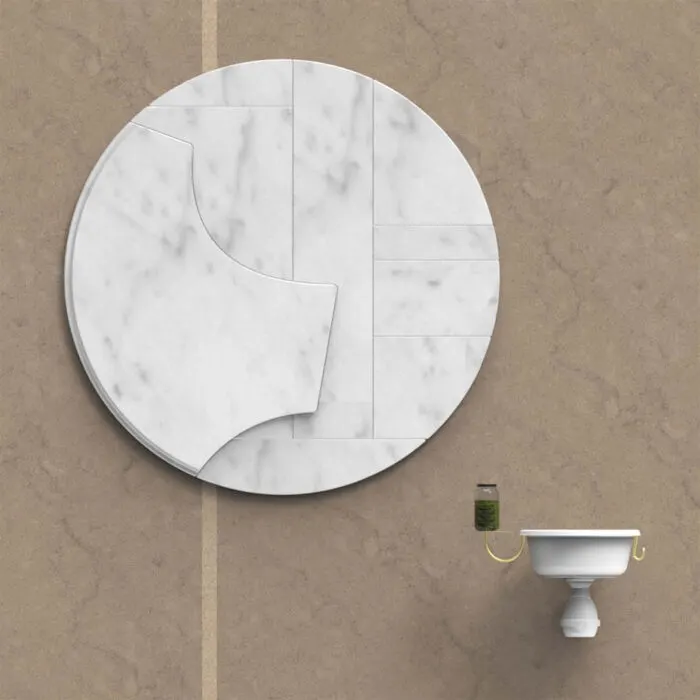
Lorenzo Damiani contrasts marble with stoneware, specifically Carrara marble and Pulpis porcelain stoneware. It’s an unexpected pairing highlighting two fundamentally different but superficially similar materials. Lorenzo suggests that it could be done the other way around. It’s a clear invitation to use “natural” elements only when other “non-natural” solutions would fail to produce the same results. Even better if we value “non-whole” parts to reuse waste, which is always valuable. The circular marble sculpture represents the concept in the mood board. It’s an element made up of processing waste and scraps that have been modelled ad hoc to create a new, fascinating object.

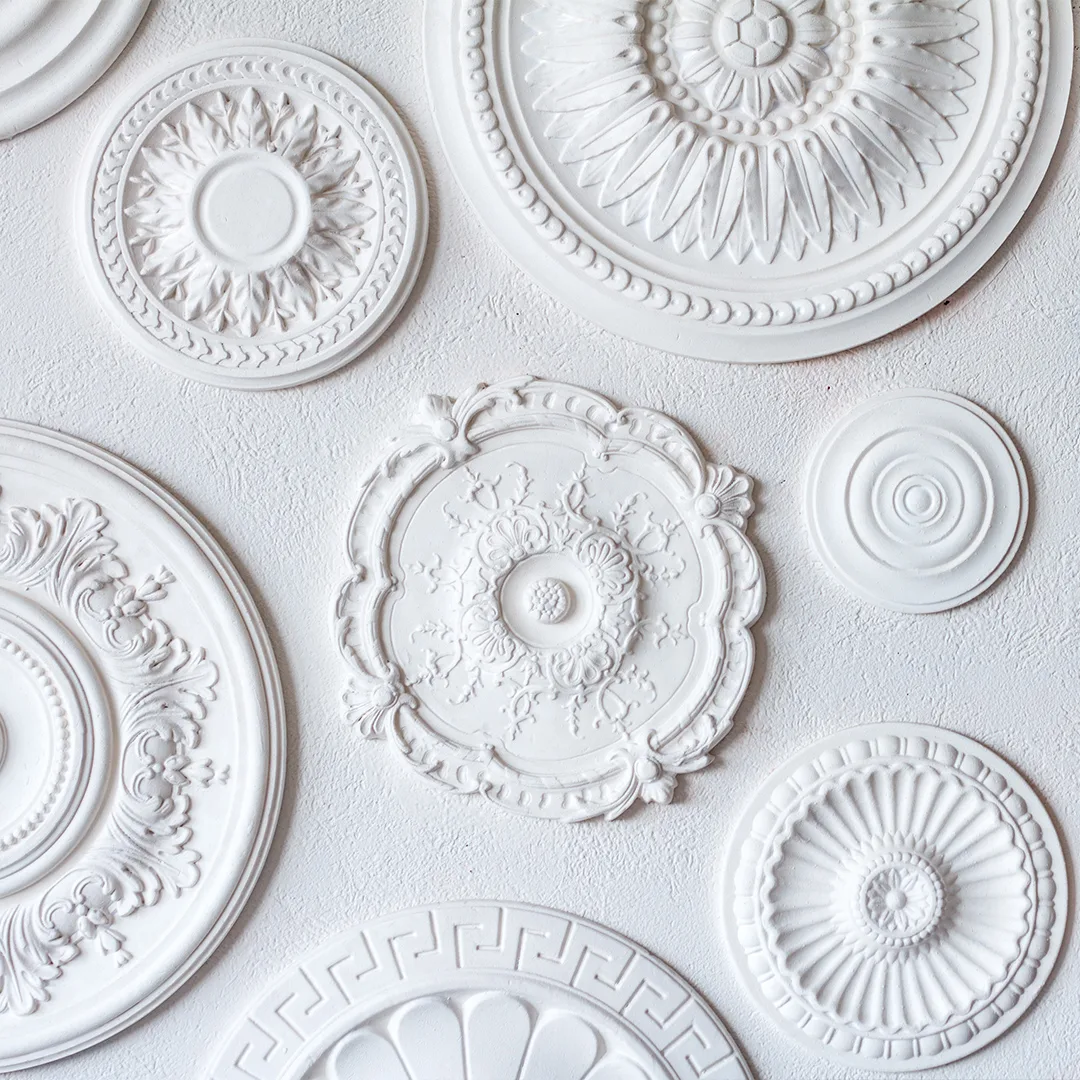

Kazuyo Komoda chooses patterns to furnish and personalise the space.
These can be made from plaster decorations and arranged randomly on ceilings and walls. Alternatively, graphical elements animate frosted glass screens that divide the bathroom into separate service areas.
The cultural contamination of the mood board is visible on these glass surfaces, which combine the sandblasted glass typical of 1930s Milanese architecture with traditional Japanese prints. Kazuyo specifies that the work is by Katsushika Hokusai.
The bathroom must be an intimate space that expresses us in every detail through luxury bathroom accessories, such as the Japanese designer’s collection of early twentieth-century French crystals.
Instead, Lorenzo Damiani uses material details and finishes to add nuances to the design.
A satin gold-coated brass object holder sits next to a white plastic washbasin. By transforming an off-cut, thin chipboard strip into a valuable insert and decoration for the stoneware and marble wall. “I have often sought harmony in contrasts,” explains Lorenzo. He creates a mood board by playing with paradoxes that investigate the expressive possibilities of materials, full of different ideas and facets.
A title for the mood board?
K: A bathroom as a jewellery box
L: Possible thought
An essential element in the design?
K: Balance. There’s no stand-out element, everything is indispensable. This indispensability lies precisely in the harmony between hybrid elements.
L: The jar of olives, as a paradigm of a certain design attitude sensitive to the use of “non-whole” elements.
A particular message?
K: Be yourself. The home should be a reflection of the life of those who live there. We mustn’t be afraid of mixing different elements, because in spaces, as in life, not everything can be simple and linear.
L: Using materials and components without limitations, all the while maintaining coherence of thought. Every material, if treated well, can become precious.
How do you imagine element of water in your mood board?
K: Water is an indispensable element, just like light. It simply participates in the overall balance.
L: I think of small droplets oozing from the marble composition.
WATCH THE VIDEO FIMA talks with Kazuyo Komoda
